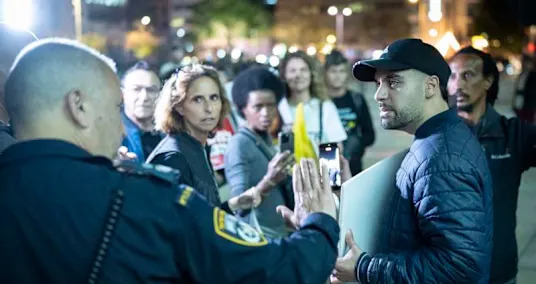
Protests took place in Tel Aviv, Jerusalem, Haifa, and Beersheba, as a survey found broad but uneven support among Jewish Israelis for Operation Roaring Lion.
Israel Police arrested 21 anti-war protesters Saturday night as demonstrations against the conflict with Iran expanded in multiple cities despite restrictions on public gatherings.
Protests took place in Tel Aviv, Jerusalem, Haifa, and Beersheba, with hundreds of participants reported in Tel Aviv and Jerusalem and about 100 in Haifa, marking the largest turnout since weekly demonstrations began. Authorities said 13 people were arrested in Tel Aviv and eight in Haifa.
Police said the gatherings were not approved under Home Front Command regulations that ban events with more than 50 people. Officials said the increase in turnout followed calls by groups opposing the government to protest despite the restrictions.
“During a situation assessment that took place at the scene with a Home Front Command representative… it was clarified that there was a real risk to human life and accordingly, Yarkon [precinct] police commander Tzachi Sharabi ordered the gathering to be dispersed,” police said.
Hadash-Ta’al chairman Ayman Odeh, an Arab lawmaker involved in the protests, criticized the police response, calling officers fascists “in the service of the government” and saying they were afraid of “the heroic citizens who went out, despite everything, to make their voice heard.”

Survey shows broad, uneven support for war
The demonstrations come as a March 2026 survey by the Israel Democracy Institute found broad but uneven support among Jewish Israelis for Operation Roaring Lion. Support was strongest on the Right at 87% and about half on the Left.
The survey also found that Jewish and Arab respondents largely agreed that Iran’s resilience has been stronger than expected. Most Jewish respondents said Israeli society could sustain the campaign for up to one month, while 28% said as long as needed. Arab respondents were less optimistic about how long the public could endure the conflict.
A majority of Jewish respondents said Prime Minister Benjamin Netanyahu’s decision was driven by security considerations, while most Arab respondents viewed it as political.
LATEST POSTS
- 1
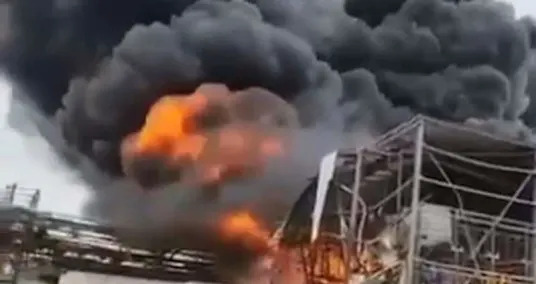
 Iranian missile hit on Ne'ot Hovav factory leads to fear of chemical leakage
 - 2If someone's always late, is it time blindness, or are they just being rude?
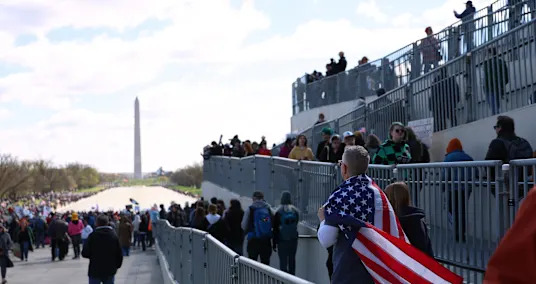
- 3'No Kings' protests live updates: More than 8 million turned out across all 50 states, organizers say
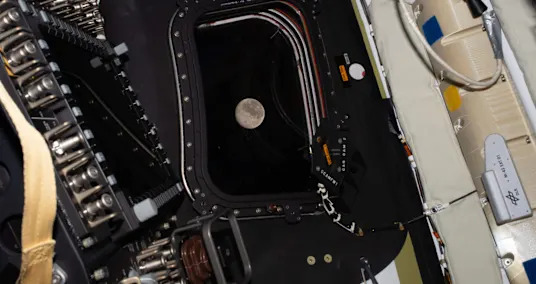
- 4Artemis II astronauts race to set a new distance record from Earth and behold the moon's far side
- 5Europe: 4 Urban communities for a Paramount Social Experience


- Instructions to Distinguish the Wellbeing Dangers Related with 5G Pinnacles
- KJ Apa stars as Jimmy Stewart in new biopic: See his transformation
- Home Machine Basics: An Exhaustive Purchasing Guide
- UPM Adhesive Materials plans new facility near New Delhi, India
- What to know about MIT professor Nuno Loureiro and the investigation into his shooting
- Best Food Truck Cooking: Decision in favor of Your Number one!
- Unwind: Four Extraordinary Spa Resorts On the planet
- Vote in favor of Your Number one Cake Type
- The Significance of Health Projects in Senior Protection.